
Packaging plays a key role in protecting products, keeping them fresh, and making them look appealing on shelves. Today, two types of films dominate the market—multilayer packaging film and single-layer packaging film. But what exactly sets them apart? Which one should businesses choose for their products?
In this blog, we’ll break down the difference between multilayer and single-layer films in simple words, explore their uses, and share facts that will help you make the right choice.
What is Single-Layer Packaging Film?
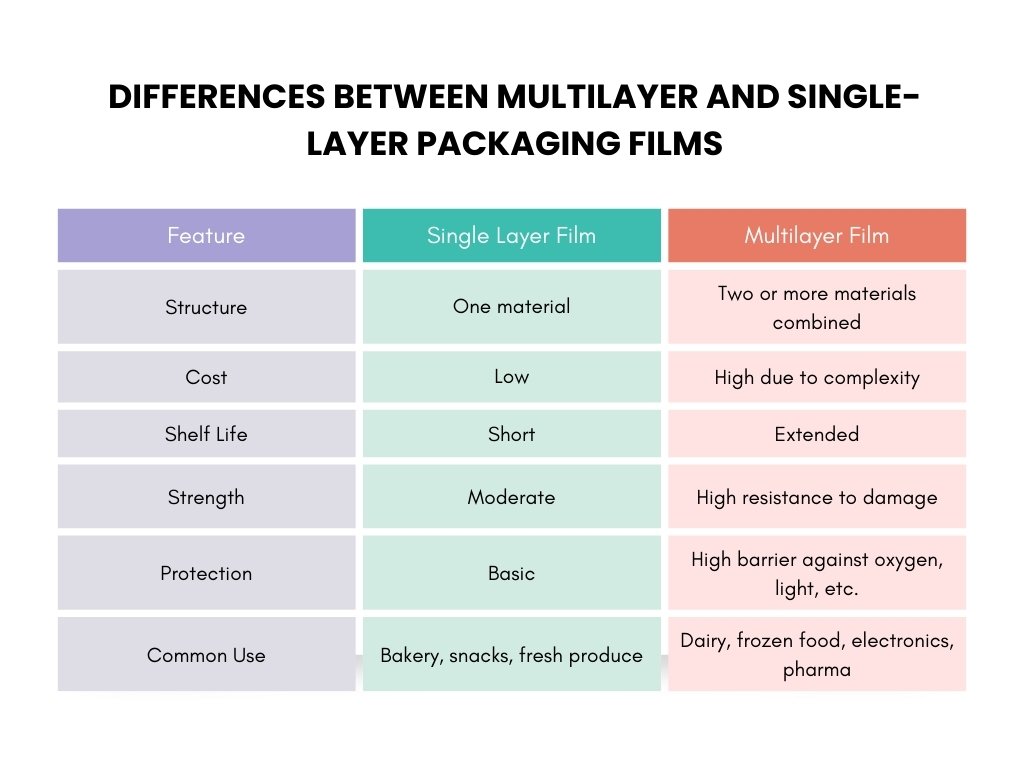
A single-layer packaging film is made from just one material, such as polyethylene (PE), polypropylene (PP), or polyester (PET). It is commonly used in industries where high strength or long shelf life is not a strict requirement.
Key Features of Single-Layer Films:
- Simple structure—made of one type of material.
- Low cost—cheaper to produce compared to multilayer films.
- Easy to recycle—since only one material is used.
- Applications – bakery products, fresh produce, and items with short shelf lives.
Fact: Around 40% of flexible packaging in local markets still uses single-layer film because of its affordability and simple use cases.
What is Multilayer Packaging Film?
A multilayer packaging film is created by combining two or more layers of different materials. For example, polyethylene (PE) for sealing, nylon (PA) for strength, and aluminum foil for barrier protection. These layers are bonded together using extrusion or lamination technology.
Key Features of Multilayer Films:
- Strong barrier properties—protects against moisture, oxygen, light, and aroma loss.
- Customizable—each layer serves a special purpose (strength, sealing, printability, barrier).
- Extended shelf life—ideal for food, pharmaceuticals, and export packaging.
- High strength – reduces risk of punctures, leaks, or damage during transport.
- Applications – chips, dairy products, frozen food, electronics, cosmetics, and pharmaceuticals.
Fact: According to a report by Markets and Markets, the global multilayer packaging film market is expected to grow from USD 75.8 billion in 2024 to USD 97.3 billion by 2029, driven by demand for sustainable and durable packaging.
Which One Should You Choose?
The choice depends on your product and its needs:
- If your product has a short shelf life and you want low-cost packaging, go with single-layer films.
- If your product requires a long shelf life, durability, and strong protection, multilayer films are the right choice.
Future of Packaging Films
With sustainability becoming a priority, companies are innovating to make recyclable multilayer films. Technologies like monomaterial multilayer structures are being developed to combine the benefits of multilayer packaging with easier recyclability.
Fact: By 2030, over 60% of global flexible packaging is expected to shift towards recyclable multilayer structures, reducing environmental impact.
Conclusion
Both multilayer and single-layer packaging films serve different purposes in the packaging industry. While single-layer films are cost-effective and simple, multilayer films offer advanced protection and durability. Understanding the difference helps businesses choose the right packaging that balances cost, product safety, and consumer satisfaction.
In today’s competitive market, packaging is not just about wrapping—it’s about protecting, preserving, and presenting your product in the best way possible.