
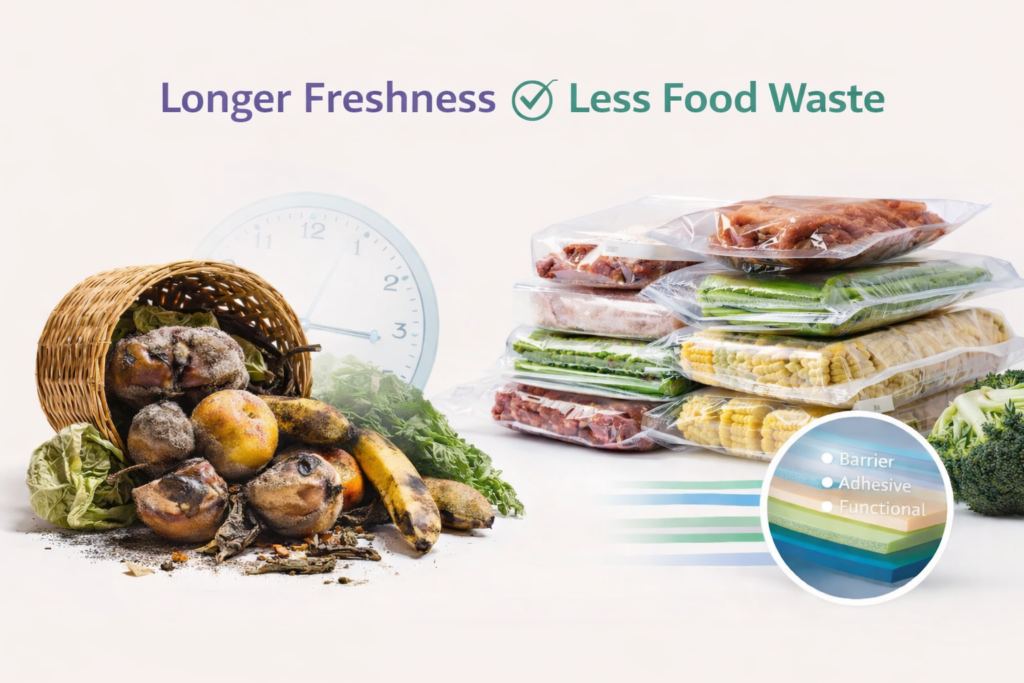
In today’s fast-paced world, it is important to ensure that food stays fresh, safe and attractive between production and consumption. New packaging designs are of great significance nowadays because of the growing concerns about the environment and the increased food waste. Multilayer packaging films is one of the technologies that have been distinguished in increasing the life of products as well as minimizing waste.
This blog discusses the way Multilayer Films particularly Multilayer packaging and Multilayer film packaging can be of great advantage in terms of shelf life and also in terms of minimizing food waste. We shall also examine advantages of Multilayer packaging on food and beverages like Flexible Food Packaging and MAP films (Modified Atmosphere Packaging Films).
Introduction to Multi-layered Packaging Films
Food products are susceptible to moisture, oxygen, light, bacteria and mechanical damage. A single film’s traditional films are not always effective in shielding against all these threats. This is where Multilayer packaging films are involved.
Multilayer Films are those types of films that are made of two or more layers of various materials. All layers serve a given purpose, e.g., membered with a barrier or strength, or heat sealability. The result? A much better packaging solution than traditional films.
What is the Effectiveness of Multilayer Packaging?
Multi-layered packaging is powerful in the sense that it integrates the material of varying properties. For example:
-
- Oxygen barrier layers inhibit oxidation reactions that run to ruin.
-
- Moisture barrier layers eliminate drying off and dampness.
-
- Sealing layers ensure airtight protection
-
- Strength layers improve puncture and tear.
Engineering layers can enable manufacturers to create a packaging solution with a significant improvement in the shelf life of products and ensuring quality.
Important Elements of Multilayer Film Packaging
An average Multilayer film packaging design can contain:
-
- Outer layer – Offers guard against physical and UV damages.
-
- Barrier layer– Barriers to oxygen, moisture and gases.
-
- Core layer – It is strong and rigid.
-
- Sealant layer – Secures that it is properly sealed in the packaging.
Other special layers can be introduced, based on the sensitivity of the product, to enhance the performance of the barrier or to provide increased printability.
How Multilayer Packaging for Food and Beverages Extend Shelf Life?
Reduced Oxygen Permeability
Oxygen is considered to be one of the primary foes of fresh food. It brings about oxidation, microbial growth and decay of flavour. Multilayer Films makes it extremely difficult to permeate through the integrated barrier layers, thus delaying the process of spoilage and increasing freshness.
Moisture Control
There are foods that are moisture sensitive. Excessive humidity may result in areas that are soggy and insufficient humidity may cause products to dry. Multilayer film packaging has a custom moisture barrier to prevent the water vapor, which can ruin texture and flavor.
Protection from Light and UV Radiation
Color and nutritional value can be destroyed under exposure to light. As an illustration, dairy and oils are very delicate. The Multilayer packaging outer layers are able to block harmful light waves which keep the quality intact over a period of time.
Prevention of Microbial Contamination
Although packaging cannot sterilize food, Multilayer packaging films have the ability to inhibit external contamination by bacteria, fungi and in particular when used together with hygienic sealing.
Mechanical Protection
Beaded products such as chips, nuts, pastries and drinks require wrapping, which is tough to ensure they are not crushed or broken during transit. Multi-material design exerts better puncture characteristics than range layer films.
Role of MAP Films (Modified Atmosphere Packaging Films)
MAP Films or the Modified Atmosphere Packaging (MAP) Films are a new form of Multilayer packaging films that aim to alter the gases surrounding the food in the package. They substitute it with a protection gas mix like carbon dioxide or nitrogen instead of normal air.
Why MAP Matters
-
- Slows respiration in fresh produce: After picking, vegetables and fruits do not stop breathing. Controlling the gases surrounding them retard metabolism which delays ripening and spoilage.
-
- Delays microbial growth: A decrease in oxygen concentration within the package inhibits the multiplication of several spoilage organisms.
-
- Sharpens the looks and softens the skin: This makes the product appear fresher longer which is crucial in consumer appeal by ensuring the product remains in the best of gas conditions.
Multilayer Films with the MAP technology is a formidable solution to especially sensitive foods including meat, fish, cheese, fruits and ready-to-eat meals.
Benefits of Flexible Food Packaging
Multilayer Film Packaging thrives in Flexible Food Packaging, which is a massive segment. It is a form of packaging that utilizes pouches, bags, wraps as well as sachets that can accommodate a range of product sizes and shapes.
Key Advantages
-
- Easy to carry around and portable: Flexible packaging is less heavy than hard containers which lower transportation expenses and carbon footprint.
-
- Enhanced shelf space distribution: Changing formats would ensure more products are placed on a shelf using flexible formats.
-
- Consumer convenience: Such characteristics as the resealable zippers, tear notches, and easy-pour designs make them more useful.
-
- Adjustable barrier characteristics: The multiple layers are designed to enable the producer to make the film suit the requirement such as a snack needs a high oxygen barrier whereas the powdered products need a moisture barrier.
-
- Sustainability potential: Recyclable and biodegradable multilayer materials are coming into the market and they do not reduce performance.
Real-World Applications of Multilayer Packaging Films
Fresh Produce
Vegetables and fruits are still one of the most difficult preservation types. Multilayer Films with MAP technology serve in the lengthening of freshness through the regulation of the gases exchange and water level.
Meat and Seafood
These are very perishable products. The packaging of food and beverages in multilayer food packaging, particularly using MAP film, can reduce oxidation and bacterial activities, which enhances the shelf life of the products immensely.
Dairy Products
Greater oxygen barrier layers are advantageous to cheese, butter and milk powders. The outcome is a flavor preservation and minimization of spoilage.
Snacks and Confectionery
Crispy foods are dependent on moisture barriers to prevent sogginess. Multilayer Films are powerful that will guarantee long crunchiness and taste preservation.
Bakery Goods
The use of flexible pouches and wraps will keep the products soft and dry them out. Crushing is also not sustainable by the mechanical strength in multilayer films.
Multilayer Films & Reduction of Food Waste
Food wastage is a worldwide issue. It happens in all areas- production and transportation, retail and consumer disposal. Multilayer Films become important in minimizing food waste:
Fewer Spoiled Products
Long shelf life translates to less food wastage through expired foods before consumption.
Longer Retail Display Times
Grocers are able to store their goods longer on the shelves without impairment of quality that lowers markdowns and disposal.
Improved Transportation Insurance.
Long lasting packaging minimizes damage of products during shipping.
Increased Customer Confidence
Customers are also likely to buy goods that have longer visible freshness thus promoting total consumption. All in all, tougher, smarter packaging helps reduce the number of discarded materials to the environment and to the supply chain overall, saving money.
The Sustainability Angle
Although multilayer films have traditionally been less recyclable because of mixed media, new technology is altering the situation. Manufacturers are now:
-
- Recycling of similar polymers.
-
- Adopting multilayered biobased and compostable.
-
- Plastic packaging design.
Recyclable Multilayer packaging films involved in Flexible Food Packaging consumption minimize the amount of raw materials used and the amount of energy used in the transport. Sustainable packaging will facilitate environmental objectives and performance.
Selecting the Multilayer Packaging Solution
Below are the Product Type with Key Requirements and the Best Multilayer Feature:
-
- Fresh produce- Gas control (MAP films)
-
- Meat & seafood- Oxygen and moisture barrier (High barrier layers)
-
- Snacks- Crispness retention (Excellent moisture barrier)
-
- Bakery- Softness & strength (Sticky pouches having seal-strength)
-
- Dairy- Flavor protection (O2 barrier + UV protection)
At Girdhar Roll, we do know the specific demands of various products. We are experts in Multilayer film packaging, which has guaranteed longevity of food with sound performance and affordability.
Future of Multilayer Packaging
Packaging technology is an exciting subject in the future. Being demanded as the needs of consumers change and sustainability goals are being met, Multilayer packaging films will be in the center of:
-
- Smart packaging with sensors to show the freshness indicators.
-
- Recyclable Multilayer solutions and mixed-use recyclable solutions accepted at mainstream recycling streams.
-
- Active packaging which emits preservatives or absorbs moisture/gases.
-
- Advanced MAP technologies that have more shelf life and less environmental impact.
Innovation in Multilayer packaging for food and beverages will remain the way forward in terms of balancing performance and sustainability, a win-win situation to consumers, brands, and the planet.
Conclusion
In a food world where food security and sustainability are the overriding factors, Multilayer Films and Multilayer packaging technologies have become the key in increasing the shelf life and fighting with food waste. Whether it is guarding the products against oxygen and moisture or making it easier to have the Modified Atmosphere Packaging (MAP) Films, these solutions provide potent solutions in the entire chain of supply.
In fresh produce, meats, snacks or beverages, Multilayer packaging films offer specific protection and high performance. Together they will assist in delivering food that is fresh, safe and tasty to the consumer through the use of Flexible Food Packaging versatility.
At Girdhar Roll, we will focus on providing Multilayer film packaging solutions that maintain product quality and which in addition can lead to sustainable practices and waste minimization.
Frequently Asked Questions of Multilayer Packaging.
What do you mean by Multilayer packaging films?
Multilayer packaging films are laminated films manufactured by several layers of various materials intended to offer better barrier protection and strength as well as durability than single-layer films.
What are the MAP film benefits in increasing shelf life of foods?
The principle of MAP Films is that the air layer within the package should be modified to decrease oxygen and increase protective gases to slow down the process of spoilage and microorganism development.
Can the multilayer films be recycled?
Historically, multilayer structures were not easy to recycle due to mixed material. Nonetheless, latest designs employ recyclable polymers or novel recycling methods to ensure that the Multilayer Films are more environmentally friendly.
Will multilayer packaging help to decrease food waste?
Yes. Multilayer film packaging can prevent food waste throughout the supply chain by enhancing shelf life, decreasing spoilage and preserving food products during transportation and storage.